Hello, Lykkers! A beautiful centerpiece can make a table feel complete. But there is a fine line between flowers that add charm and flowers that get in the way. A tall arrangement may look impressive, yet it can block the view across the table and make conversation awkward.
The best centerpieces do two things at once: they look lovely and they let people connect. Here is how to get that balance right.
Why Height Matters
The most common mistake with centerpieces is choosing an arrangement that is too tall. If the flowers sit above eye level when people are seated, guests have to lean to see each other. This is why low arrangements usually work better for dining tables.
As a general guide, keep the centerpiece below the line of sight when seated. That usually means keeping the flowers under about 30 centimeters tall, including the vase. If you want more height, use a narrow vase and keep the blooms near the top so the middle stays clear.
Choosing the Right Flowers
Low arrangements work best with flowers that have short stems or naturally compact shapes. Good options include:
- Small roses or spray roses
- Daisies or chrysanthemums
- Ranunculus
- Small tulips
- Lavender or rosemary sprigs
- Succulents or small greenery
Avoid flowers with heavy heads that cause stems to droop, as these can make the arrangement look messy. Also avoid very fragrant flowers if you are serving food, since strong scents can compete with the meal.
Choosing the Right Container
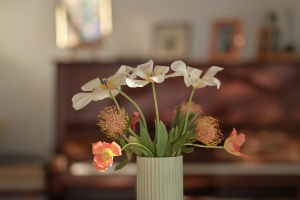
The container affects both height and stability. A wide, shallow bowl keeps the arrangement low and makes it easy to see across the table. A small jar or cup works well for a few stems. A narrow vase can be used if the flowers sit near the top.
Make sure the container is stable. A light vase with tall flowers can tip easily. Adding a few stones or marbles to the bottom helps weigh it down. A non-slip mat under the vase also prevents sliding.
Keeping the View Clear
If you want a fuller centerpiece, spread it out rather than stacking it high. You can use several small containers placed along the center of the table instead of one large one. This keeps the arrangement low and gives everyone a clear view.
Another option is to place flowers at one end of the table or along the sides rather than in the middle. This leaves the center open for serving dishes and conversation.
Matching the Centerpiece to the Occasion
For everyday meals, keep it simple. A small jar with three stems is enough. For a dinner party, you can use a slightly fuller arrangement, but still keep it low. For a celebration, you might add candles or small decorative objects, but make sure they do not crowd the space.
The key is to think about how the table will be used. If people need to pass dishes or reach for items, leave space. If the table is mainly for sitting and talking, a slightly fuller centerpiece works fine.
A good centerpiece does not need to be large or expensive. It needs to suit the table, the meal, and the people around it. Keep the arrangement low, choose flowers with compact shapes, and use containers that stay stable. When the flowers support the conversation instead of blocking it, the table feels welcoming and complete. That is the real art of the centerpiece.